So last week while looking into Falun Gong I kept running up against two rather strange walls. The First was why the CCP would allow something like Falun Gong to exist in the first place, let alone grow as large as it did. And second was the concept of Qigong. While I have had a general understanding of what Qigong is for a while now and I was aware that Falun Gong is an off branch of Qigong which combined elements of Buddhism and Taoism with the practice of Qigong, I wasn't entirely sure how it fit into Chinese history as a whole.
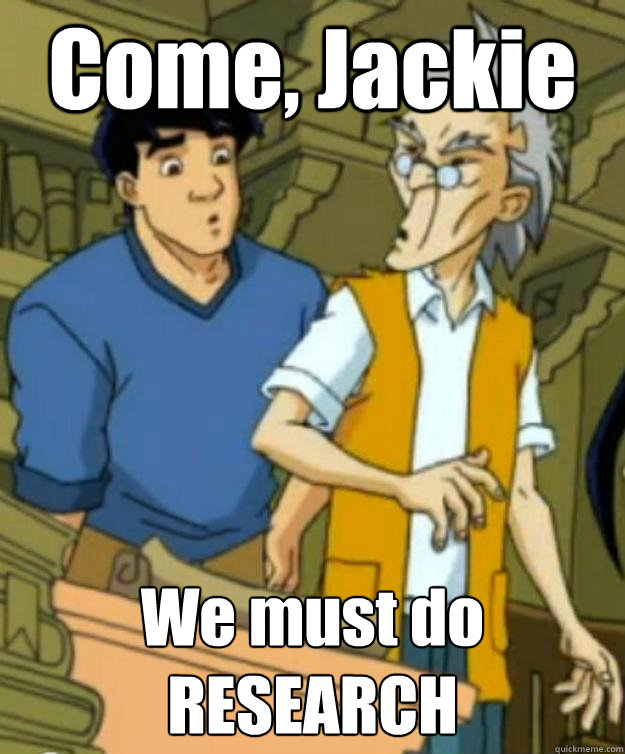
So what did I do? Well I went to the library of course!
I which my life was as cool as this show
So what is Qigong? Well that's a pretty complicated answer, but in short Qigong is based on Chinese folk traditions based on breath, movement, posture, and control (kind like yoga but different). The tradition as a whole collection of various practices stretches back about 4000 years. However, in the 1940s and 50s the CCP began to combine various elements of the tradition based on the health, wellness, and scientific benefits of the traditions. Why?
Well the things was Mao (and many other communist leaders) acknowledged that although Chinese history was filled with feudalism and imperialist oppression it was also filled with beneficial practices, ideas, and medicinal techniques which should be researched, understood, and utilized by the new republic.
One of the ideas which was examined and valued was the traditions that would become Qigong due to traditional claims of health benefits surrounding the practices. Qigong progressively had it the philosophical and religious aspects of it were removed and over the course of the next decades Qigong was modified, streamlined, and changed even further by the huge social changes that tore through China.
While this could seem like this wasn't as interesting project as my previous research topics, I was really excited to go into this particularly because I felt lost in my work with Falun Gong. So this topic rose out of my need to answer the question where on earth did Falun Gong come from/gain that support to become as widespread as it did. Which, considering the fact that Qigong is practiced by millions of people to this day, now makes a lot more sense to me. Additionally it makes sense that the CCP would crackdown on Falun Gong because, unlike Qigong, it was in no way regulated or controlled by the party meaning that it subverted much of the party's main stream views of religion.
In terms of lingering questions I'd be curious to learn more about the traditions that Qigong is based in addition to Qigong itself. Especially the religious aspects although modern Qigong used to based on Qi, the party is currently criticizing it for that and the practice is beginning to refocus on the health and medicine aspects of it, I'm curious in seeing what the non-party version of the story is.
Well that's all from me today!
Peace and Love
Jacob
Sources:
Chang, Maria Hsia. 2004.Falun gong : The end of days. New Haven [Conn.]: Yale University Press.
In what seems to becoming a constant theme I feel like I never get to talk about nice things, ever. But then again when studying social justice issues through the lens of religion I'm beginning to feel like that's a given. Anyway on to our topic of doom for today Falun Gong (which I'm sure you've heard of in general), its violent repression (which I'd be shocked if you hadn't heard of), The Art of War (which I'd be weirded out if you hadn't heard of but would understand) and how they're all interconnected (or might be anyway).
So what's this all about? Well sometime in the early history of China, 206 BCE is the age of the oldest known copy, the Art of War was either written or finalized to the current book that it is today. Whether or not it was written by Sun Tzu is unclear (some modern scholars claim he didn't exist), regardless of all of this the modern version of the Art of War was finished by the 6th century BCE at the latest.
A looker ain't he
The book is an in-depth treaties on the best possible way to engage one's enemies in war and how that engagement is a distinct art form unto itself. The book has been an influential part of East Asian Military and Business strategies and was even used in the Invasion of Japan by allied forces. It advocates a strategy of deception, cunning, and strategic outmaneuvering to defeat ones opponents often without having to fight them in a head on confrontation. The book maintains that the greatest victory is one that is won without any bloodshed and posits in the first chapter (remember this now) that all warfare is based on deception and the manipulation of information. So what? What does any of this have to do with Falun Gong...well a lot actually.
In 1992 Li Hongzhi combined elements of Daoism, Buddhism, and Qigong (a pratice that has grown up in China since 1950 based on breath and controlled bodies movements to obtain spitual clarity, physical fitness, and overall wellness) to create Falun Gong. The religion advocates slow moving, meditation, breath control, a tripartite mindset of Truthfulness, Compassion, and Forbearance, as well as non-violence to obtain enlightenment. At its height in China the religion claimed a membership over 10 million people that was built up of a huge range of Chinese society. Party members and farmers practiced the religion and sights like this weren't all too uncommon:
notice how non-violent they are
So of course this began to deeply deeply disturb the leadership of the CCP and in 1999 the government declared the religion an illegal organization and began to crackdown. However, as the group was non-violent and peaceful there wasn't a lot the government could do without fear of some sort of reprisal (remember Falun Gong rivals the CCP in size right now), unless, of course, public opinion was swayed in their favor. So while thousands were arrested and detained and a massive propaganda campaign was launched, most of the mainland Chinese thought that the government was acting to harshly against the organization.
"Uphold science, eradicate superstition"
Firmly support the decision of the Central Committee to deal with the illegal organization of 'Falun Gong
But then on January 23rd 2001 everything changed. That evening five people set themselves on fire outside of Tiananmen square in protest of the crackdown.
And just like that suddenly everything the CCP had said about Falun Gong appeared to be true. Only an evil cult that was spreading ideas of superstition and social instability could have pushed five of its practitioners to do such a thing. However, Falun Gong was quick to counter that this behavior was out of character for practitioners of Falun Gong while pointing out a huge number of contradictions in the reporting of the events by the state sponsored news (which can be seen below)
While I am skeptical to jump on the band wagon of a conspiracy theory the video and other materials put forward by the group do seem convincing. However, to be fair, their is convincing evidence on both sides.But for a moment let's entertain the idea that the accusations were true and the protests were staged. With that in mind I began to entertain the idea bringing the Art of War into this conversation. Remember that line I told you to remember about all warfare being based on deception? Well that's exactly what happened here. After this event Chinese, both followers and observers, throughout the country began to doubt Falun Gong. And many of the faithful who were determined to hold on to their beliefs began to be plagued with doubt and drop away and those that did hold on were subjugated to unspeakable forms of torture, abuse, reeducation, and other human rights violations.
Which is just like the Art of War capture who you can and use them against your enemy or in the terms of a battle for public opinion you cause deep seeded doubt and suspicion in the moderates and unconvinced isolating the remaining resistance. By doing so you slowly make the remaining group seem more and more radical to the now opposed public causing the remainder to be further isolated and stigmatized allowing the government to crush resistance effectively without causing public outcry. By using this strategy the Chinese government did have to resort to violence, however, by cutting off Falun Gong from its more moderate supporters and manipulating the flow of information they were able to effectively surround the group and crush its center. While pockets of resistance did spring up (Liu Chengjunan activist hacked a satalite news feed for the city of Changchun and managed to broadcast the False Fire video on loop for fifty minutes, he was arrested and died in prison 21 years later) the group has been effectively silence in China due to the CCP's actions. Even if the protests were real the way the CCP handled the situation was, from the stand point of The Art, in a brilliant manner. Regardless of its validity the information surrounding the protests was disseminated and controlled in such a way that it caused confusion and allow the government to have a greater control over public opinion through its use of deceptive tactics.
While I'm still working on this it is an interesting line to peruse and I'm probably gonna work on it in greater detail in the weeks to come. But in the mean time I'd like to explore more of the details of exactly what happened during 1999 in China and read closer into whatever sources of public opinion at the time exist (although how reliable they will be is completely up in the air). It could also be interesting to investigate how the international community reacted to what happened in China as well as the state of affairs of Falun Gong today, more than ten years after the crack down.
Peace and Love
Jacob
Sources
Chang, Maria Hsia. 2004.Falun gong : The end of days. New Haven [Conn.]: Yale University Press.
Forney, Matthew. 2001. How china beat down falun gong.Time157, no. 26: 32.
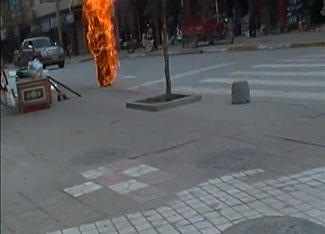
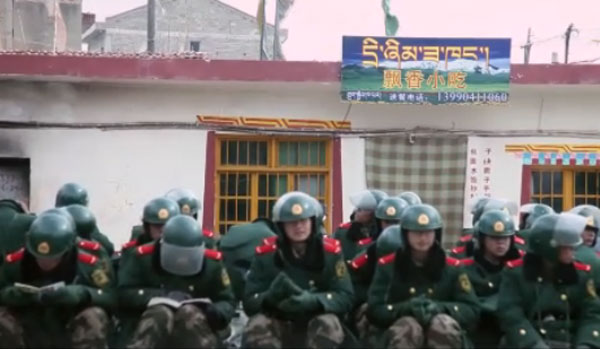
I think those two photos sum it up best. Tibet is burning and tensions are beginning to mount. According to the BBC currently 21 monks have set themselves on fire in the past few months in protest of myriad of issues concerning Tibetian Chinese relations, but, in this situation at least, there are two of cardinal importance. As I mentioned last time the recent restrictions in the area around Tibet 'proper' has sparked this second wave of protest, but what are the restrictions? Well that's the second point many of the monks, nuns, and Tibetans in general feel that China is deeply restricting their freedom of expression, religion, speech, and movement. China's response to these claims?
Notice the fire extiquisher
There are dozens of photos and this post could could become a photo journal from here on out, but that would miss the point. China is cracking down hard against the Tibetians labeling them separatists and terrorists and they will continue to do so until their goal of security is reached. Regardless of who you think is right in this situation people are being beaten, restricted, watched, and (perhaps most importantly) dying by their own hand or otherwise. And China's actions aren't helping. But then again China has dealt with religious protests similar to this before and in a similar manner I might add.
Each time China has successfully put down the protests and, for the most part, managed to eradicate the memory of what happened from the public's mind. So, in many ways, this crackdown makes a lot of sense it worked before so it will work again, at least that's what the Chinese government is banking on. And while a large part of me if fearful that this will be a replay of what's gone before part of me is hopeful for some change.After all if you'll remember Chinese geomancers did predict that several Party officials would wind up behind bars by years end.
Take away questions? Well this time I guess I'm very interested to see how this situation develops and I'll be watching it as closely as I can in the days and weeks to come.
In loving memory of the dead, may you find what you seek: